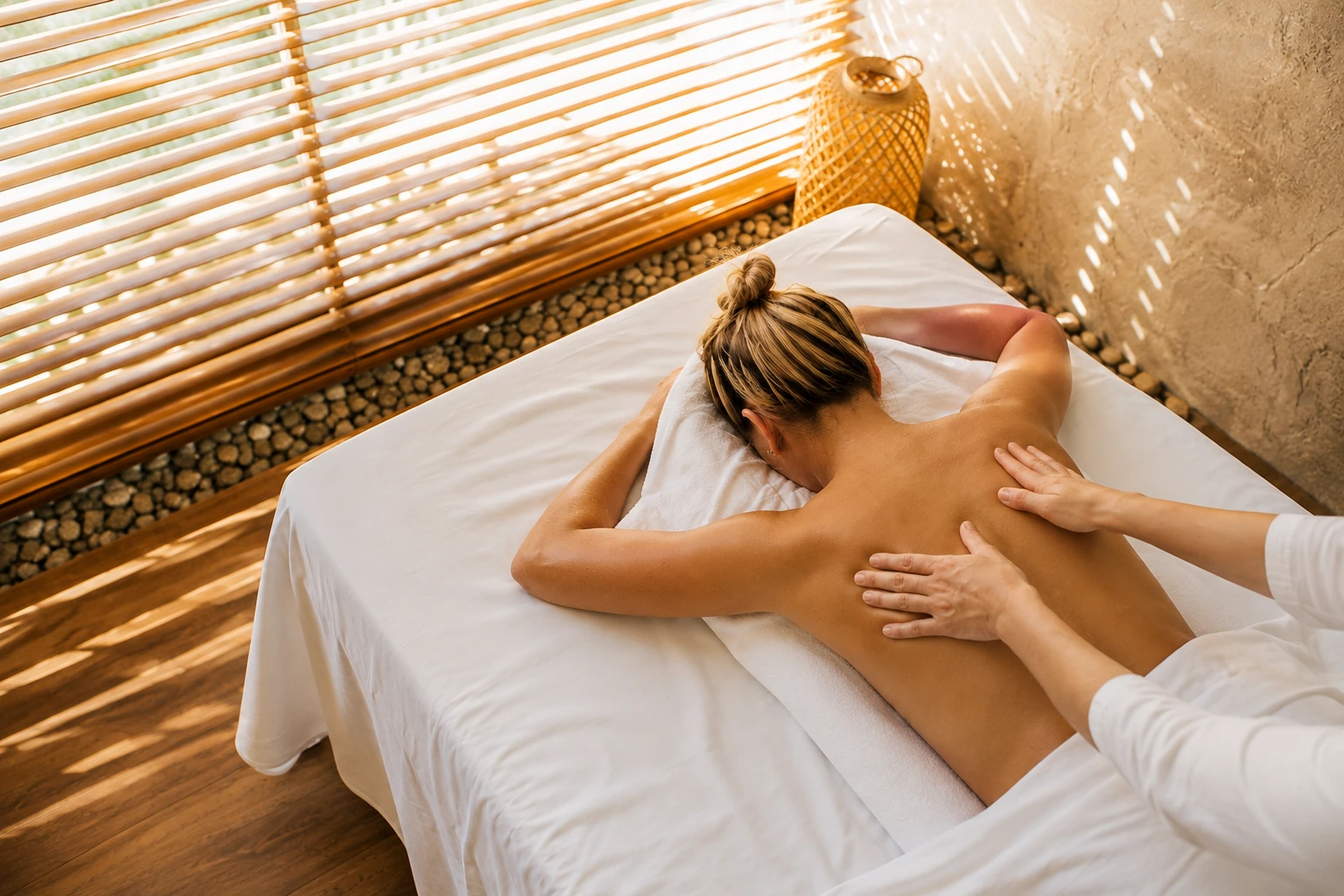
Deep tissue massage gets filed under pampering, somewhere between a facial and a scented candle. In practice it is closer to manual therapy. The pressure is slower, it is aimed at a specific structure, and the session has a result in mind before it starts. Here is what that work actually does.
1. Relieves Chronic Pain and Muscle Tension
Chronic pain is usually maintained by something, and often that something is a muscle that has been shortened so long it no longer registers as tight. Deep tissue work finds those structures, applies sustained pressure along the fibre, and waits for the tissue to yield rather than forcing it. Clients with long standing low back, neck and shoulder pain typically notice a change in the first two or three sessions, and the interval between flare ups lengthens from there.
2. Aids in Recovery from Injury
After a strain heals, the body lays down scar tissue that is strong but disorganised, and that tissue does not glide the way healthy fascia does. Careful cross fibre work and myofascial release around a healed injury improve that glide, which is often the difference between an ankle that feels normal and one that keeps rolling. Work is always staged to where the injury actually is in its recovery, and coordinated with whatever your physician or physical therapist has advised.
3. Enhances Athletic Performance
Most recreational athletes are asymmetrical. One arm swings, one leg pushes off, one side rotates further. Over a season the dominant side tightens and the body compensates elsewhere, which is why the knee complains about a hip problem. Regular deep tissue work between events keeps those restrictions from accumulating, and assisted stretching restores the range the sport keeps borrowing.
4. Improves Posture and Mobility
Posture is not willpower, it is muscle length. If the chest and hip flexors are short from a decade of desk work, standing up straight is a fight against your own tissue. Releasing the short side and waking up the long side changes the resting position, and mobility follows. This is where neuromuscular technique matters, because pressure alone will not hold: the muscle has to be lengthened and then used before it keeps the new length.
5. Reduces Stress and Promotes Mental Clarity
Sustained, predictable pressure moves the nervous system out of its alert state. Breathing slows, heart rate drops, and the mental noise that comes with holding tension quiets down with it. Clients often describe the hours after a session as unusually clear headed. That is not incidental to the physical work, it is part of the same mechanism.
6. Supports Circulatory and Lymphatic Health
Massage strokes directed toward the heart assist venous return, and light rhythmic work moves lymph toward the nodes. Both matter more than people expect in Southwest Florida, where heat, air travel and long stretches of sitting all contribute to swelling in the lower legs. Better circulation also means treated tissue gets the oxygen it needs to recover from the work itself.
Experience the Benefits at Time Well Spent FL
Sessions at Time Well Spent FL run 60 or 90 minutes at the studio on Vasco Street in Punta Gorda, and every technique the session calls for is included. Call 254-258-0873 and describe the problem. New clients receive 10 percent off their first massage.